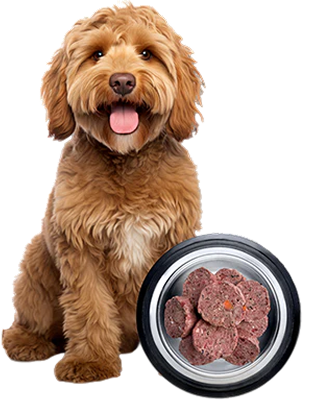
The Power of Raw Food

Why more and more pet owners are choosing raw food

Raw food aligns with your dog's biological needs.

The 8 Benefits of Raw

What owners notice after switching

Less itching & better skin

Wolfork contains no artificial additives and grains, which are common triggers of skin irritation and itching in dogs.

Hard, small stool

Wolfork is almost completely digested. Less waste remains, resulting in smaller and firmer stools.

Healthy weight without dieting

Kibble contains a lot of carbohydrates that dogs don't need. Wolfork is rich in protein and low in sugars, which supports a healthy weight.

More energy & vitality

All nutrients in Wolfork are present in their natural form and are therefore better absorbed, which directly contributes to more energy and vitality.

Shiny, full coat

Wolfork is naturally rich in omega-3 and omega-6 fatty acids. These essential fatty acids nourish the skin and provide a shiny, full coat.

Fewer allergic reactions

Most canine food allergies are caused by artificial additives, grains, and low-quality proteins; ingredients not found in Wolfork.
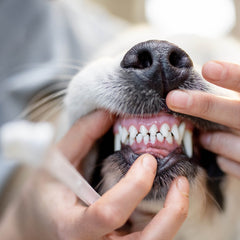
Fresh breath & fewer dental problems

Our meals contain no added sugars in the form of carbohydrates, which helps reduce plaque and tartar

Suppler joints & better movement

Wolfork naturally contains glucosamine and chondroitin from cartilage and bones, substances that lubricate and support the joints.

Wolfork vs others

Wolfork vs others
  • Complete meal
  • No artificial fragrances or flavorings
  • No preservatives
  • More than 80% meat
  • No fillers (grains, rice, corn)
  • No synthetic vitamins and minerals
  • Unheated or heavily processed
Wolfork
  • Complete meal
  • No artificial fragrances or flavorings
  • No preservatives
  • More than 80% meat
  • No fillers (grains, rice, corn)
  • No synthetic vitamins and minerals
  • Unheated or heavily processed
Steamed
  • Complete meal
  • No artificial fragrances or flavorings
  • No preservatives
  • More than 80% meat
  • No fillers (grains, rice, corn)
  • No synthetic vitamins and minerals
  • Unheated or heavily processed
Kibble
  • Complete meal
  • No artificial fragrances or flavorings
  • No preservatives
  • More than 80% meat
  • No fillers (grains, rice, corn)
  • No synthetic vitamins and minerals
  • Unheated or heavily processed

Here's how it works

1

Order

Ordered today before 12h, delivered the next working day between 17h and 22.30h.
2

In the freezer

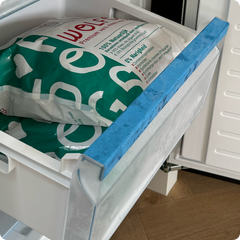
Upon receipt, place the food directly into the freezer. 2 bags per freezer drawer.
3

Thaw & Serve

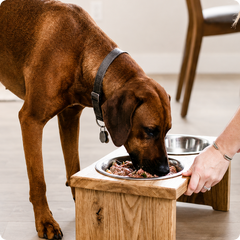
Burgers 6 hours in advance from freezer to refrigerator. Serve directly from refrigerator.

What specialists say

Specialists in nutrition

After studying Biology at Åbo Akademi, Mikael worked as a nutritionist at the National Institute of Animal Science in Finland. Mikael obtained his PhD in Nutrition & Feed Quality from the Royal Veterinary and Agricultural University in Copenhagen. Since 1994, Mikael has been working full-time professionally with raw pet food.

Dr. Tor Mikael Lassen

Consultant food scientist

Anna works full-time in the Small Animal Veterinary Department at the University Animal Hospital. This hospital is part of the Faculty of Veterinary Medicine at the University of Helsinki in Finland. Anna leads DogRisk, a leading and independent research team that focuses entirely on canine nutrition and health.

Dr. Anna Hielm–Björkman

Assistant Professor, Senior Clinical Instructor

Myths & Facts

Myth: Raw meat is dangerous for my dog

Fact: Raw meat is, in principle, not dangerous for a dog. A dog's digestive system is designed to eat raw meat. Precisely because the food is raw, all nutrients are absorbed maximally, unlike with heated products. We regularly test for Salmonella and E. coli and adhere to a strict food safety plan.

Myth: Raw meat is dangerous for me

Fact: Most people come into contact with raw meat daily when preparing their own meals. Therefore, if you handle Wolfork meals in the same way you handle your own meals, raw meat is not dangerous to humans. Wash your hands carefully and thoroughly clean all used materials to prevent contamination. Furthermore, it is good to know that Wolfork exclusively uses ingredients from slaughterhouses that process animal products suitable for human consumption.

Myth: Dogs become aggressive from eating raw meat

Fact: Raw meat does not make dogs aggressive. There is no evidence whatsoever that a complete raw diet causes aggressive behavior. On the contrary, many dog owners experience that their dog is more balanced, has a more stable energy level, and feels better on a natural, unprocessed diet that meets the needs of a dog. Behavior is influenced by factors such as genetics, upbringing, training, health, and living environment, not by feeding raw meat.

Myth: A dog is more likely to get worms if he eats raw meat

Fact: No. Dogs primarily contract worms through contact with contaminated faeces, contaminated soil, prey animals, or by drinking from puddles and ditches in nature, not through raw meat from approved slaughterhouses. Wolfork meals are frozen with nitrogen (−180°C) and then stored deep-frozen. With the correct freezing time, any parasites and most eggs are rendered harmless. Therefore, there is no increased risk of worms from eating Wolfork meals.

Myth: Eating bones is dangerous for dogs

Fact: When bones are heated, there is an increased risk of splintering, and this is indeed dangerous for dogs. Raw bones, however, do not splinter and can be safely consumed by dogs. This also applies to puppies. Bones are a natural source of calcium, phosphorus, vitamins, fatty acids, and minerals, making them an essential part of a dog's diet.

Myth: Puppies and adult dogs can eat the same raw food

Fact: A dog reaches adulthood in one to two years and grows very quickly during this period. A growing puppy therefore has different nutritional needs than an adult dog. Wolfork offers different recipes for puppies and adult dogs, ensuring your dog receives the right nutrients at every stage of life.

Myth: It takes a lot of time to feed a dog a raw diet

Fact: Some people are deterred by the idea that a raw diet requires a lot of preparation. That's not true at all: it's no more complicated than feeding kibble or wet food. At Wolfork, meals are delivered frozen. All you have to do is thaw a portion daily. It can be that simple to feed your dog a raw diet.

Myth: Picky eaters don't eat raw dog food

Fact: A dog experiences the world with its nose. Scent is therefore incredibly important for a dog. Raw food has the pure scent of natural ingredients; for most dogs, this evokes curiosity and interest. From experience, we know that picky eaters are often more enthusiastic about raw food than about kibble.

Myth: My dog ​​is too old to switch to a raw diet

Fact: A dog is never too old to switch to raw food. In fact, older dogs particularly benefit from quality food, as their diet needs extra support for mobility, joints, overall health, and digestion. Wolfork has special senior food that perfectly meets the needs of older dogs.

Myth: My dog ​​is too young for raw meat

Fact: As soon as a puppy is allowed to eat solid food (from 3 to 4 weeks old), they benefit from raw dog food. Wolfork Puppy Complete has been specially developed to provide young dogs with all the necessary nutrients during their growth and development.

Myth: Only a select few dog breeds can eat raw meat

Fact: Raw dog food can be tailored to dogs of all shapes and sizes. Every dog breed benefits from a raw diet because the nutrients are present in their purest form.

Myth: Vets do not recommend raw dog food

Fact: Many veterinarians are concerned that when people prepare raw meat meals themselves, the dog does not get all the necessary nutrients. We fully understand this concern, which is why Wolfork has been carefully formulated by nutritionists according to FEDIAF guidelines for complete feed. This way, you can be sure that your dog receives all the necessary nutrients daily.

Myth: Calcium deficiency is a common problem in dogs that eat raw food

Fact: No. Calcium deficiency only occurs when a dog receives an unbalanced diet, for example, exclusively muscle meat. Wolfork meals contain finely ground bone as a natural calcium source and are complete and balanced, formulated in collaboration with nutritionists. This ensures your dog receives all the nutrients he needs daily.

Myth: Kibble cleans dogs' teeth

Fact: No, raw food is actually better for a dog's teeth. Raw food contains virtually no carbohydrates or sugars, which means plaque and tartar build up less quickly. Kibble contains starch and carbohydrates that are partially converted into sugars during the production process. These can contribute to plaque formation. In addition, many dogs only chew kibble briefly before swallowing it, which limits its cleaning effect. A healthy set of teeth starts with preventing plaque, and prevention is better than cure.

Myth: Dogs need grain

Fact: Grains are one of the most well-known allergens for dogs. Dogs also do not benefit from grains, as they have a low carbohydrate requirement. The dog's digestive tract is primarily developed to digest animal proteins and fats. They can digest starchy foods to a certain extent, but this should never be the main component of their diet.

Myth: Raw meat contains too many calories for neutered or spayed dogs

Fact: A dog's hormone balance changes when neutered/spayed. This means they need less energy. When creating nutritional advice, we take into account whether a dog has been spayed or neutered. With Wolfork dog food, your dog will therefore not consume an excessive amount of calories.

Myth: Raw food is much more expensive than kibble

Fact: At first glance, raw meals may seem more expensive than a bag of kibble. But the comparison goes beyond the price per kilogram. Dogs fed raw food generally have lower veterinary costs, better gut health, and fewer issues with allergies and skin conditions. Raw food with quality ingredients is therefore an investment in your dog's health rather than an unnecessary expense.

Myth: Raw food smells bad in the house

Fact: Good quality raw food has a neutral smell, similar to fresh meat from the supermarket. What does smell strongly are kibble and wet food with artificial aromas and fillers. Wolfork meals contain no artificial fragrances or flavorings, making the smell mild and natural.

Myth: Raw food has no scientific basis

Fact: There is increasing scientific research demonstrating the benefits of raw food for dogs. For example, the DogRisk research group from the University of Helsinki published a peer-reviewed study (Hemida et al., 2021, Journal of Veterinary Internal Medicine) showing that early exposure to raw food is associated with a significantly lower risk of chronic inflammatory diseases. Wolfork collaborates with DogRisk to further substantiate the science behind raw food.

Myth: Raw dog food spreads dangerous bacteria throughout the house

Fact: Handling raw dog food is no different from preparing raw meat for your own meals. Basic kitchen hygiene, washing hands, cleaning utensils and surfaces, is sufficient to avoid any risk. Wolfork meals are produced in EC-approved facilities and regularly tested for pathogens such as Salmonella and E. coli.

Myth: Raw meat is dangerous for my dog

Fact: Raw meat is not inherently dangerous for a dog. A dog's digestive system is designed to consume raw meat.

Myth: Switching to raw food is risky if my dog has always eaten kibble

Fact: A gradual 4-day transition is sufficient for most dogs to allow their digestive system to adjust. Replace a quarter of their current food with Wolfork each day to ensure a smooth transition. Most dogs tolerate the change very well and show positive changes within just a few weeks.

Frequently Asked Questions

Raw food optimally matches the natural diet of a dog. Wolfork meals consist of fresh, unprocessed meat, vegetables, and fruit, fitting within a natural, varied diet. The connection between fresh feeding and dog health is being observationally studied by DogRisk (University of Helsinki). Furthermore, we do not use pre-mixes: we derive all nutritional values directly from the ingredients themselves, without synthetic additives. Read more in ourknowledge base.

Many essential vitamins, minerals, and proteins are lost during the heating process. For example, a cooked cauliflower contains fewer nutrients than a raw cauliflower. To ensure optimal quality, digestibility, and absorption of nutrients, consuming food raw is best.

That is correct. The digestive system contains billions of organisms that are part of the microbiome. A dog cannot survive without good bacteria. The intestinal lining ensures that pathogens and toxins do not enter the bloodstream.

This depends on the composition of the feed. Soy and grains, among others, are among the most common nutrients that cause allergies. At Wolfork, we do not use these ingredients, unlike many kibble producers. The presence of the right balance of good nutrients in the diet can prevent or resolve many complaints.

No, raw meat is not dangerous for a dog. A dog's digestive system is specifically designed to optimally digest raw food and absorb all nutrients.

No, the idea that dogs become aggressive or bloodthirsty from raw meat is a myth. There are no studies or scientific evidence to suggest that a dog's behavior is negatively affected by eating raw meat. In fact, we are convinced that your dog's energy levels are more balanced when they are fed a raw diet.

All FAQs